Sufficiently documenting our detections is essential in detection engineering as it provides context around the the purpose, detection logic, and expected behaviour of each detection rule. Just as important as documenting individual detections is tracking how the overall detection library evolves. In this part we are looking into how we can tackle both of those issues.
Author: Stamatis Chatzimangou
Detection Engineering: Practicing Detection-as-Code – Validation – Part 3
In this part, we focus on implementing validation checks to improve consistency and ensure a minimum level of quality within the detection repository. Setting up validation pipelines is a key step, as it helps enforce the defined standards, reduce errors, and ensure that detections are reliable and consistent.
Detection Engineering: Practicing Detection-as-Code – Repository – Part 2
This is the second part of the Practicing Detection-as-Code series, where we will cover some basic elements of designing a repository to develop, store, and deploy detections from. We'll go through several different aspects of the setup like the Git platform, branch strategy, repository structure, detections structure, taxonomies, and content packs.
Detection Engineering: Practicing Detection-as-Code – Introduction – Part 1
In this first part we are going through the basic terminology and concepts of a Detection-as-Code approach in Detection Engineering. Throughout this series, weโll dive deep into a wide range of concepts, strategies, and practical blueprints that you can adapt to fit your own workflows. From building a detection engineering repository to validating detections, automating documentation, and delivering them at scale to numerous managed environments. Weโll also explore how to effectively test and monitor your detections to ensure they stay reliable.
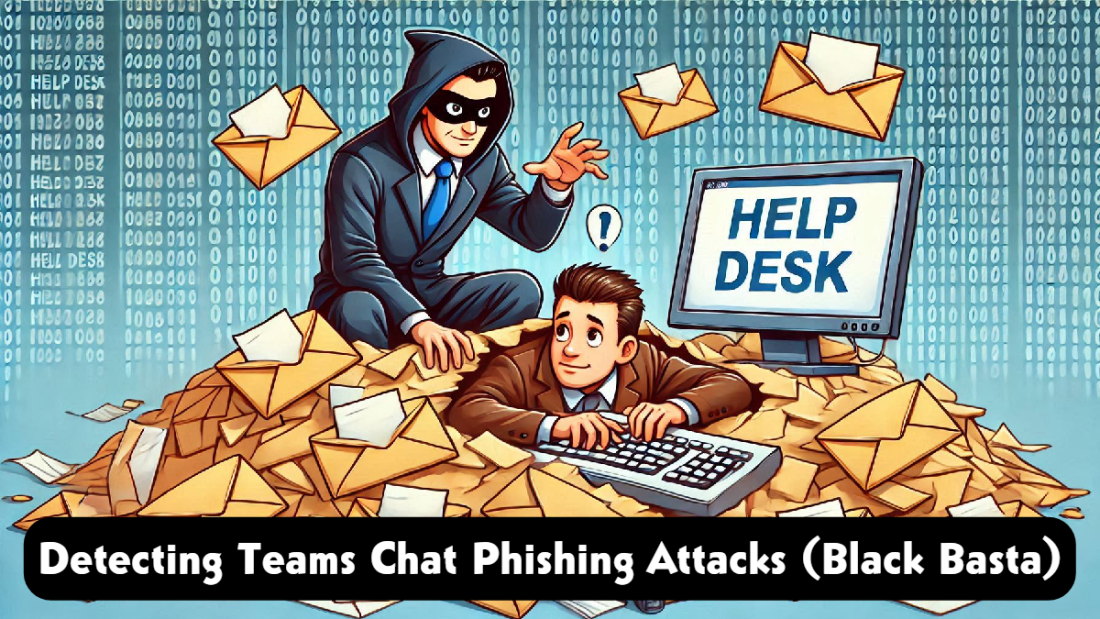
Detecting Teams Chat Phishing Attacks (Black Basta)
For quite a while now, there has been a new ongoing threat campaign where the adversaries first bomb a user's mailbox with spam emails and then pose as Help Desk or IT Support on Microsoft Teams to trick their potential victims into providing access. This social engineering tactic is being attributed to the ransomware group "Black Basta".
Validate your Windows Audit Policy Configuration with KQL
We provide a KQL query that will help you validate your defined Windows audit security policy configuration. Defining a Windows audit policy is an important step in establishing a robust security posture. Ensuring that the audit policy is applied consistently across your environment is just as important as defining that policy and quality controls should be in place.